Wild Berries, Local Herbs, and Roasted Grain: Inside Canada's Craft Barley Tea Revolution

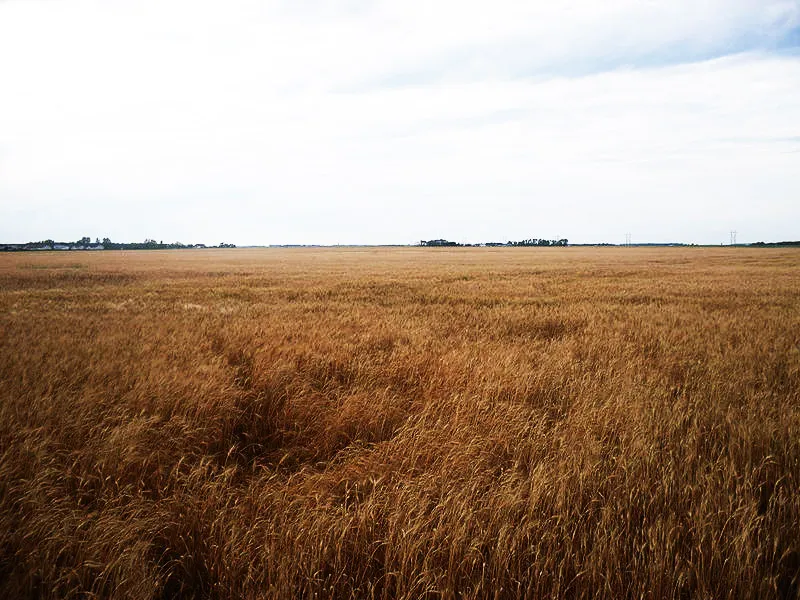
Photo: Eric Jones, CC BY-SA 2.0, via Wikimedia Commons
Terroir is a French word that wine people love, and for good reason. It captures something genuinely profound — the idea that what grows in a specific patch of earth, shaped by its particular climate, soil, and surroundings, produces flavours that can't be replicated anywhere else. A Niagara Riesling doesn't taste like a Okanagan Riesling, and neither tastes like anything from Burgundy. Place matters. It gets into the glass.
For most of its history, barley tea hasn't been talked about in those terms. It's been a humble, honest drink — roasted grain steeped in hot water, drunk warm in winter and cold in summer, appreciated for its simplicity rather than its complexity. But something is changing. Across Canada, a loose but growing network of small-batch producers is starting to ask a different question: what happens when you apply the logic of terroir to a grain-based beverage?
The answers, it turns out, are delicious.
A Movement Without a Manifesto
There's no formal craft barley tea guild in Canada, no industry association setting standards or issuing certifications. What exists instead is something more organic — a scattered community of makers, farmers, and food entrepreneurs who arrived at similar ideas from very different directions.
Some came from the specialty coffee world, already fluent in the language of single-origin sourcing and small-batch roasting. Others came from herbalism and foraging traditions, deeply familiar with the edible landscape of their particular region. A few came simply from family kitchens, where barley tea had always been present, and wondered why no one was doing more with it.
What unites them is a conviction that Canadian barley tea can be more than a category — it can be a conversation about place.
East Coast Edge: Sea Buckthorn and Salt Air
In Nova Scotia's Annapolis Valley, producer Lena Okafor has been crafting a barley tea blend that incorporates sea buckthorn berries harvested from coastal shrublands near the Bay of Fundy. The berry — tart, orange, and extraordinarily high in vitamin C — was introduced to Atlantic Canada decades ago but has since naturalized along certain coastal stretches, growing almost wild in the salt-tinged air.
"I wanted to make something that tasted like this specific coastline," Okafor explains. "When you open a bag of this blend, you should smell the roasted grain first, and then something bright and almost citrusy underneath. That's the sea buckthorn. It's the East Coast in a cup."
Her small-batch production is almost entirely hand-processed, and she sources her barley from a family farm less than an hour's drive away. The result is a beverage with a remarkably clear sense of origin — you couldn't make this blend in Alberta or BC and have it taste the same, because the sea buckthorn wouldn't be the same. The land is in the flavour.
Prairie Smoke and Sage: The Saskatchewan Approach
Move inland, and the ingredients shift dramatically. On the Prairies, craft producers are working with native plants that have defined the landscape for millennia — wild sage, prairie smoke, and saskatoon berries among them.
Saskatoon, Saskatchewan-based maker Tomás Béland has built a modest but devoted following around his barley and saskatoon berry blend, which draws on both the obvious regional reference and a genuine flavour affinity. Saskatoon berries — a staple food source for Indigenous peoples across the Plains long before European settlement — have a flavour somewhere between blueberry and almond, with a depth that pairs beautifully with the roasted, slightly smoky character of barley.
"There's something powerful about using a berry that fed people on this land for thousands of years and pairing it with a grain that's defined Prairie agriculture for over a century," Béland says. "You're not inventing something new. You're connecting threads that were always there."
He's careful to acknowledge the Indigenous heritage of saskatoon berries in his product storytelling, and has begun conversations with local First Nations communities about more formal collaboration — a conversation he describes as still early but important.
BC's Botanical Playground
British Columbia, with its extraordinary botanical diversity, may offer the richest canvas of all. From the rain-soaked forests of the coast to the dry Okanagan interior, the province produces an almost bewildering range of native herbs, berries, and botanicals.
Kelowna-based producer Sasha Tran has been experimenting with a rotating seasonal series of barley tea blends that change with what's available locally — a spring release featuring Douglas fir tips and wild mint, a summer blend with Okanagan elderflower, an autumn version built around rosehip and yarrow. Each release is limited, numbered, and documented with tasting notes that wouldn't be out of place on a craft brewery's website.
"I think about it the same way a winemaker thinks about vintage," Tran says. "This year's elderflower harvest was different from last year's because June was drier. That gets into the tea. I think that's worth celebrating rather than ironing out."
The approach has earned her a loyal following among consumers who are increasingly interested in provenance — people who want to know not just what they're drinking, but where it came from and who made it.
Borrowing the Wine World's Language
The terroir framework, borrowed from viticulture, turns out to be surprisingly well-suited to barley tea. Wine people have spent centuries developing vocabulary for the relationship between land, climate, and flavour — and grain-based beverages have a similar sensitivity to those variables, even if the conversation is newer.
Barley itself expresses terroir. The same variety grown in Alberta's Peace River region versus Ontario's shorter growing season produces grain with measurably different characteristics — different moisture content, different starch profiles, different flavour precursors that emerge during roasting. Add regional ingredients on top of that, and you have a genuinely place-specific product.
This is the argument that Canada's craft barley tea makers are making, sometimes explicitly and sometimes simply through the work itself. They're not asking consumers to take it on faith. They're saying: taste this, and tell us you can't taste the place.
What This Means for Canadian Beverage Culture
Canada has a strong craft beverage culture — anyone who's visited a BC winery, a Quebec microbrewery, or a Prince Edward Island cider house knows that Canadians take small-batch production seriously. Barley tea is now joining that conversation, and its arrival feels timely.
As consumers grow more curious about local food systems, Indigenous ingredients, and the stories behind what they drink, craft barley tea offers something genuinely compelling: a beverage category that is authentically Canadian in its raw materials, culturally resonant across multiple traditions, and wide open for creative exploration.
The craft barley tea revolution doesn't have a headquarters or a launch date. It's happening in small batches, in rural kitchens and converted barns, on coastlines and Prairie flats and mountain valleys. It tastes like the land it came from. And that, it turns out, is exactly what makes it worth drinking.